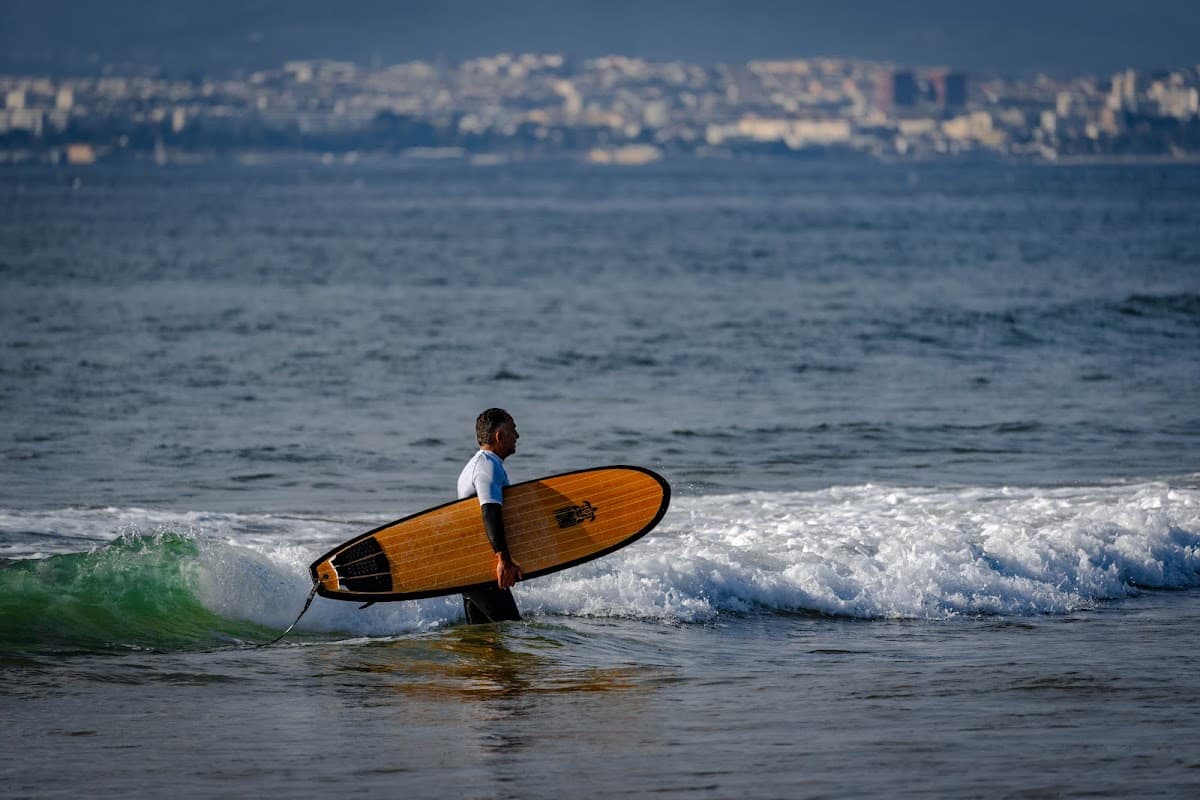
Portugal has been investing steadily in opening up access to its beaches, recognising that the sea is a right for everyone — regardless of mobility. With 95 accessible beaches spread across the country, including the islands, Portugal today has one of the most comprehensive networks for reduced-mobility support in the Iberian Peninsula.
The Praia Acessível — Praia para Todos programme, created by INRP (the National Institute for Rehabilitation), is the foundation of this transformation. Launched to guarantee access, safety and comfort to people with reduced mobility, the programme sets strict technical criteria and supports municipalities and concession-holders in their implementation.
What defines an accessible beach
Not every beach with boardwalks or reserved parking meets the national programme's requirements. A genuinely accessible beach brings together a set of conditions that make the experience safe and independent.
Key criteria include:
- Access ramps from the car park to the sand
- Boardwalks across the sand down to the water's edge
- Amphibious chairs available free of charge (to enter the sea)
- Adapted toilets and changing rooms
- Trained staff to assist with mobility
- Adequate signage and firm surfaces in circulation areas
The amphibious chair is often the most-valued element by visitors to these beaches. It is purpose-built for safely entering the water, operated with the help of lifeguards trained for the role.
Accessible beaches by region
Algarve — 29 beaches
The Algarve leads the list with 29 accessible beaches, reflecting the region's tourism investment and its commitment to inclusion. Among the best-equipped are Meia Praia in Lagos, Praia da Rocha in Portimão, Praia da Armação de Pêra, Praia da Quarteira and Praia da Oura in Albufeira. Most have long boardwalks, amphibious chairs and lifeguard support during the bathing season.
North — 23 beaches
The North has 23 accessible beaches, several of them along the Minho and Douro Litoral coastline. Highlights include Praia da Apúlia in Esposende, Praia de Matosinhos, Praia de Espinho and Praia de Leça da Palmeira. These beaches stand out for the quality of their infrastructure and proximity to urban centres.
Lisbon and the Tagus Valley — 20 beaches
With 20 accessible beaches, the Lisbon region offers good options both on the South Bank and along the Cascais and Sintra lines. Praia da Costa da Caparica is one of the most complete in the country, with multiple access points and equipment. Praia de Carcavelos, Praia das Maçãs and Praia de Santo Amaro de Oeiras round out the most popular choices.
Centre — 15 beaches
The Centre coast has 15 accessible beaches, including some of the most emblematic beaches in Portugal. Praia da Barra and Praia da Costa Nova in Ílhavo, Praia da Figueira da Foz and Praia da Nazaré are among the best prepared, with well-maintained boardwalks and amphibious chairs available in peak season.
Azores — 4 beaches
The Azores archipelago has 4 accessible beaches, with Praia da Vitória and Praia de Angra do Heroísmo standing out, both on Terceira island. Given the volcanic nature of the islands, sea access can be more demanding in some places, but these beaches have been specifically adapted.
Madeira — 2 beaches
In Madeira, Praia da Calheta and Praia de Machico are the two beaches with certified adapted access. The island's rocky nature makes adaptation more challenging, but these two options offer suitable conditions.
Alentejo — 2 beaches
The Alentejo coast has 2 accessible beaches, with Praia de Vila Nova de Milfontes the best known. The lower density of infrastructure is offset by the quality of the landscape and the tranquillity.
Regional summary
| Region | Accessible beaches |
|---|---|
| Algarve | 29 |
| North | 23 |
| Lisbon and the Tagus Valley | 20 |
| Centre | 15 |
| Azores | 4 |
| Madeira | 2 |
| Alentejo | 2 |
| **Total** | **95** |
Typical equipment at an accessible beach
When visiting a beach certified by the national programme, you can expect to find:
- An access boardwalk from the car park to the sand
- A boardwalk across the sand to near the bathing zone
- One or more amphibious chairs for free use
- Showers accessible from a wheelchair
- Adapted toilets with support bars
- A rest area with adapted umbrellas and loungers
- A lifeguard post with staff trained in mobility support
Equipment availability can vary depending on the beach and the time of year. Outside the official bathing season some services may not be available.
Practical tips
Before leaving home, check the accessible beaches guide online and confirm the beach has the equipment you need.
On opening hours: most mobility-support services run only during supervised hours, usually between 9am and 7pm.
What to bring: plenty of sunscreen, suitable swimwear, and rubber-soled shoes if you plan to enter the water without an amphibious chair.
Best time of year: June and September offer weather similar to July and August with much smaller crowds, which makes circulation easier.
Contact in advance: if in doubt about amphibious chair availability, contact the concession-holder or the municipality responsible for the beach directly.
Portugal's investment in beach accessibility is a clear sign that access to the sea is not a privilege — it is a real possibility for every person. With 95 equipped beaches from north to south, there is always an accessible option near you.