River beaches are an under-explored alternative for visitors with reduced mobility. With calm water, controlled depth and a more peaceful setting than the Atlantic coast, they offer particularly welcoming conditions for anyone looking for a safe, relaxed bath. In Portugal, several river beaches have been investing in adapted infrastructure — boardwalks, amphibious chairs, toilets with support bars — but provision is still very uneven between municipalities.
This guide brings together practical criteria for assessing the accessibility of a river beach and identifies some of the inland Portuguese beaches best prepared for visitors with reduced mobility.
Why visit a river beach with reduced mobility
River beaches solve three classic difficulties that coastal beaches present for wheelchair users, walker users or people with reduced mobility.
Sand is more limited or absent — many river beaches have direct access from the boardwalk to the water, or have grass/paved areas instead of a wide sandy stretch to cross. There is no Atlantic swell, which makes the return to dry land more predictable and safe. And the setting is often calmer and less crowded, especially outside the peak of July and August, making it easier to move around and easier for companions to help.
Water temperature is also generally more pleasant: reservoirs in the Alentejo and Ribatejo warm up quickly in summer and reach 22–24°C in August, compared with 16–19°C in the Portuguese Atlantic.
Accessibility criteria to check
Not every "accessible" river beach meets the same level of adaptation. Before visiting, it is worth checking:
- Reserved parking close to the beach access (ideally less than 100 metres away)
- Continuous boardwalk from the car park to the bathing zone, without steps and at least 1.20 m wide
- Adapted toilet with support bars, room for a wheelchair to turn and ramp access
- Amphibious chair available free of charge for water entry, with support from a trained lifeguard
- Shaded area or the option of renting an umbrella on a firm surface
- Clear accessibility signage at the beach entrance
In Portugal, the national Praia Acessível — Praia para Todos programme, run by INRP, certifies beaches that meet these criteria. Look for the blue wheelchair icon at the beach entrance, or check the official list at praiaacessivel.pt before visiting.
River beaches worth highlighting
The list below brings together river beaches classified by APA, included in the national accessibility programme, distributed across the country. Supply is concentrated mainly in the Centre and Alentejo, the regions with the most river beaches.
Praia Fluvial do Agroal — Ourém, Santarém
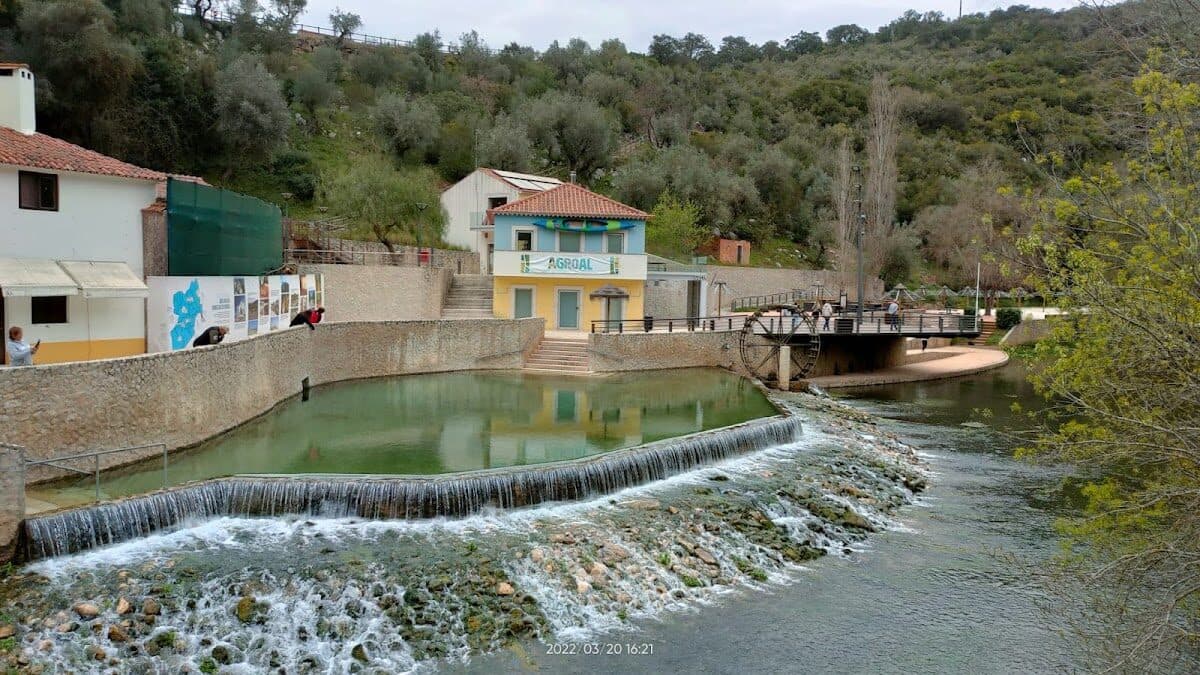
One of the most photogenic river beaches in the country, with intensely turquoise water caused by limestone. The bathing area has been adapted, with a boardwalk from the car park and a firm grass area around the pool. There is an adapted toilet and a lifeguard during the bathing season. The water is calm and depth is easily controlled, ideal for assisted bathing.
Praia Fluvial de Constância — Constância, Santarém
Where the Tagus meets the Zêzere, this beach has some of the best support infrastructure among Portuguese river beaches. It has a full boardwalk, an adapted toilet, a grass area close to the water and proximity to a historic village with ample parking. The official bathing season covers June to September with a permanent lifeguard.
Praia Fluvial de Castelo de Bode — Tomar, Santarém
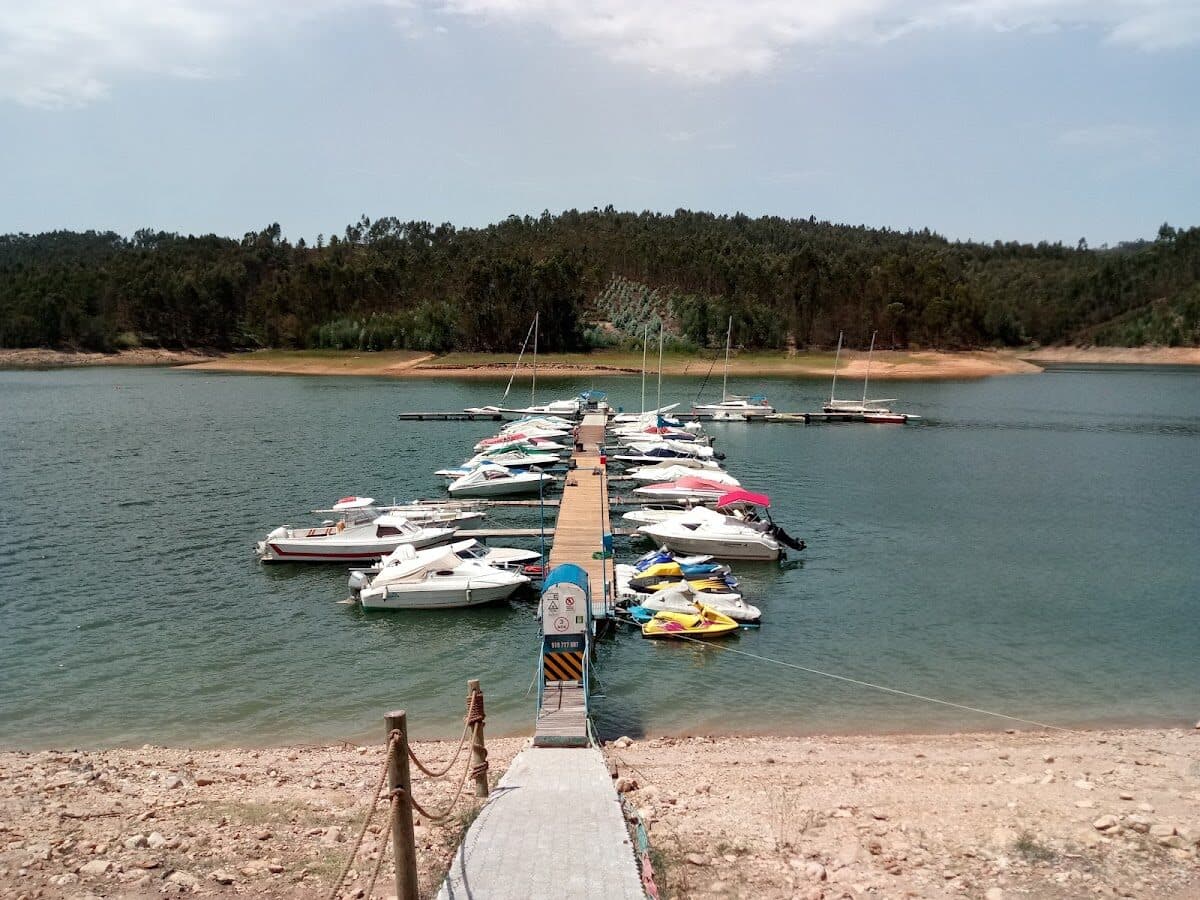
Set within the vast Castelo do Bode reservoir, this beach offers calm, warm water throughout the summer. It has an access boardwalk, nearby car park and a marked bathing area. Depth increases gradually, with shallow zones suited to safe bathing.
Praia Fluvial de Vila Velha de Ródão — Castelo Branco
Located in one of the most scenic stretches of the Tagus (next to the Portas de Ródão gorge), it has a wooden boardwalk, an adapted toilet and a lifeguard. The municipality has invested in accessibility improvements in recent years.
Praia Fluvial de Adaúfe — Braga
The best-equipped river beach in the Minho. On the River Cávado, with calm water on a safe bank, it has a boardwalk, an adapted toilet, a picnic area nearby and a lifeguard. It is one of the most popular river beaches in the north of the country.
Praia Fluvial de Idanha-a-Nova — Castelo Branco
On the Marechal Carmona reservoir, this beach is part of the Praia Fluvial complex and has good accessibility conditions. Water access is gradual and the surrounding infrastructure (grass areas, esplanades, adapted toilets) is among the best maintained inland.
Praia Fluvial de Tomar — Santarém
A few minutes from the Convent of Christ, this urban beach on the River Nabão is one of the most accessible in the country. It has a level boardwalk, an extensive landscaped area and excellent support for visitors with reduced mobility.
Practical tips for visiting with reduced mobility
Preparation makes all the difference for a visit to a river beach. A few practical recommendations:
- Confirm the availability of an amphibious chair before you go — not every beach has one, and at some you need to book with 24 hours' notice through the municipality
- Visit outside peak hours — between 10am and 12pm or after 5pm there is usually more room to move and more support available
- Check water quality on infoagua.apambiente.pt — after heavy rain, quality can drop temporarily
- Bring sunscreen and a change of clothes — adapted toilets are generally available but not always close by
- June and September are the best months — temperatures similar to August but with far fewer crowds, making circulation and assistance easier
- For bathing with lifeguard support, confirm that the beach is within the bathing season (1 June to 30 September) and that the service is active in the time slot you want
Inland vs coastal accessibility
Accessible beach provision in Portugal is heavily concentrated on the coast — of the 95 beaches certified by the national programme, the majority are coastal (Algarve, North and Lisbon lead the table). Accessible river beaches are far fewer, but they offer a different visit profile: quieter, more sheltered from the wind, with warmer water, and usually set in historic villages or protected natural areas, which adds value to the experience beyond the bathing itself.
For anyone looking for an alternative to the Atlantic coast — especially during summer months when the Atlantic stays cold even in August — the accessible river beaches of inland Portugal are an under-used option that deserves more attention.